“Greetings to you, the lucky finder of this Golden Ticket new article, from Mr. Willy Wonka Matthew Peck! I shake you warmly by the hand! Tremendous things are in store for you! Many wonderful surprises await you!
I kid, but seriously I’m back and with a bit of a rebrand! For those unaware this used to be called “The Soap Box Racer” and before that “The Soap Box Derby” until we were threatened with litigation. I liked the idea or “Derby” more than “Racer” and even had a whole theme to go with it (involving old tyme derby hats like the ones they wore in “The Rocketeer” or, well, the past). In the end “Racer” just never sat well with me. The logo appeared to be a rip off of Petrolicious (I believe this to be subconscious by the way) and the name was just too lengthy.

I wanted something that aligned my love of automotive obscura while not being prominently used anywhere else. Inline Five really grew from my first Volkswagen. A 1986 Volkswagen Quantum Wagon that sported an Audi Inline 5 cylinder engine. Coming from a family that had owned nothing but American cars during my younger days (with one exception I’ll touch on some other time) this engine was absolutely crazy. Five cylinders? That is oddly between the more conventional four and six. What in the name of Josef Ganz is this!?

Today I’m here to ask you… What’s in a name? For eons, as far back as people put four round discs to make things roll, there have been names both famous and infamous. Conestoga (the wagon #OregonTrail), Mustang, Beetle; you get the idea. All pretty recognizable names, right? Mustangs never really left and there have been three separate “final” edition Beetles.
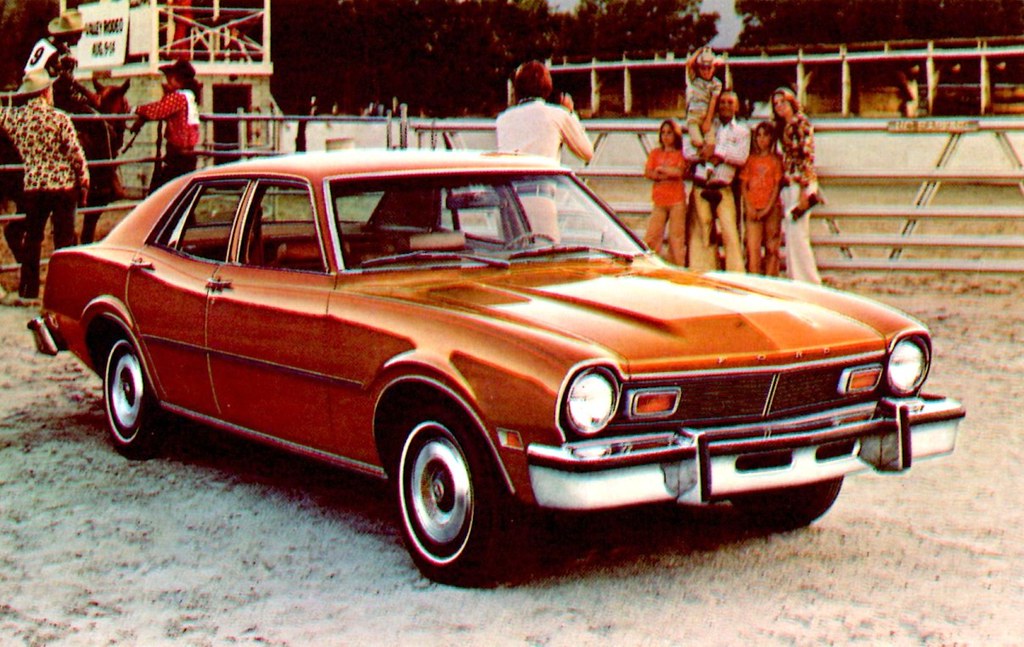
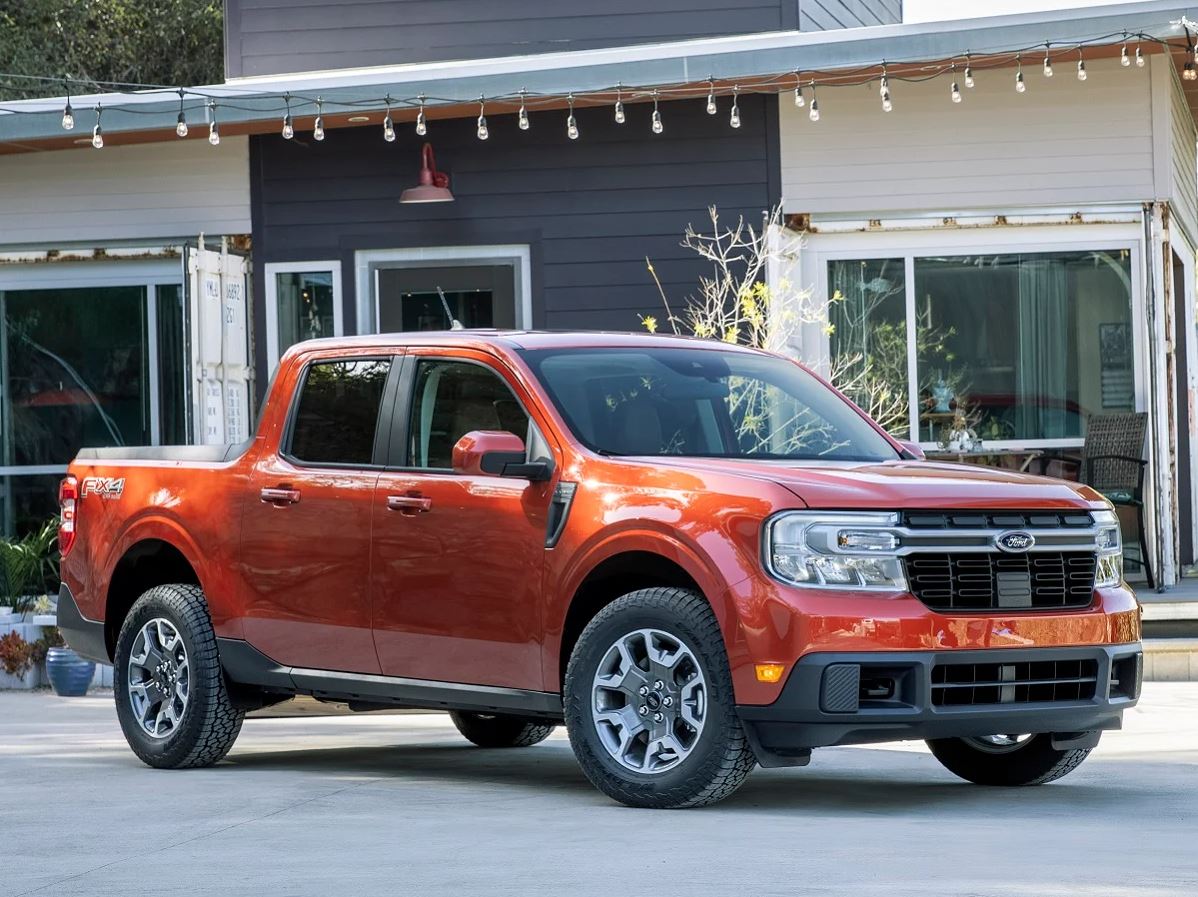
Recently Ford announced a new hybrid pickup track named Maverick. Whether the timing of this was purposely aligned with the new Top Gun movie we may never know, but I’ll be the first to tell you this thing is interesting. Partly because the concept of a bare bones pick-em-up truck with decent gas mileage would be boss. But also because Maverick is a name previously used by Ford in the 1970s. Not as recognizable as Pinto, Maverick was used in the much maligned category of American cars at the time: compact. Like most American compacts of the era this thing had a reputation for not quite being “Built Ford Tough.” Pitted against the Chevy Vega (and countless other GM rebadges), the AMC Gremlin and Pacer; the Maverick was set to take the Japanese and German imports by storm! A shit storm by comparison. It was so fabulous that it was replaced by the Pinto-yes that Pinto-in 1975. Was it awful? Not really. Was it good? Hardly. There are those that have an affinity for it (read: Richard Rawlings) but it unceremoniously rusted away, figuratively and literally, into the past.
So Ford must’ve thought enough time had passed that they could resurrect this name. After all it really is an attractive name for a vehicle, especially a pickup truck. It’s catchy, isn’t named after a bean, and has some gusto behind it. The Pinto disaster adequately overshadowed the mediocre memories of meager engines and metallic Swiss cheese that was the Maverick from a national collective. Rest assured we’ll probably never see the name Pinto grace the backside of a vehicle ever again. Relegated to the automotive infamy with the Corvair and Edsel.
Sometimes a name isn’t sullied by poor performance, catastrophic collisions, or a tendency to end up with wheels facing the incorrect vertical direction. Sometimes people just can’t accept what might be ahead of its time. Like the Tucker or Pontiac Aztek, the pill of progress can be hard to swallow. Not to say that’s for lack of trying. People wanted Tuckers but the big three stonewalled the vehicle for its threat of setting new safety standards. The Aztek, well sure it was kinda trash, but it foretold car based SUVs and crazy angles to come.
Unless you’ve been living under a rock you know what an Aztek is… or was. Thanks to George Lucas and Francis Ford Coppola you may even know who Preston Tucker is. But let’s get crazy obscure… let’s go back to 1934.
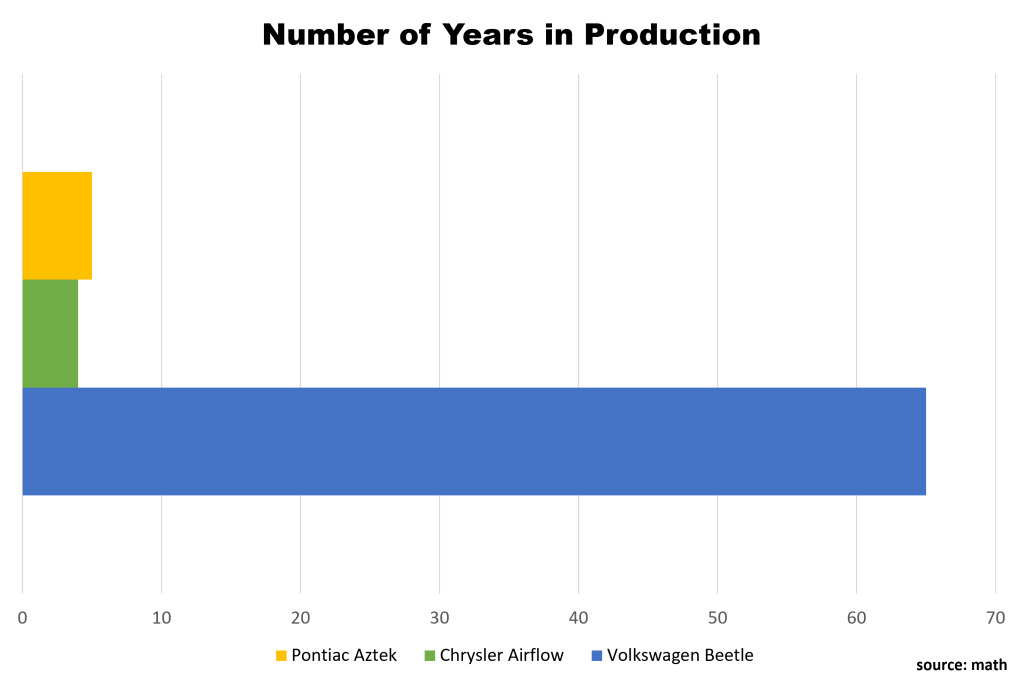
Have you ever heard the tragedy of Darth Plagueis Carl Beer the wise engineer? He wasn’t the inventor of beer, at least not to my knowledge. This is a car website after all. Beer, two other engineers, and Orville Wright-yes that Orville Wright-used a wind tunnel to develop a vehicle that would eventually be known as the Chrysler Airflow. Full disclosure, I had planned on the Airflow being my first article after the rebrand. To my absolute surprise, two months ago, Chrysler discretely and too little fanfare, announced a new one. This is apt you see, because the Airflow was misunderstood in its time. Chrysler only produced the car from 1934 to 1937. That’s one year LESS than the Aztek. Below is a chart because they help visualize everything better. I’ve included the Volkswagen Beetle as an unbiased litmus:
In retrospect I could’ve called this article “The Airflow and the Aztek” however there are few similarities apart from one key, isolating factor: appearance. People just didn’t know how to take the Airflow’s art deco, streamlined design. Here was a vehicle with modern innovations like unibody construction, engine placement over the front wheels for better weight distribution, and proven aerodynamics that looked like nothing else on the road.
People hated it. It was the 1930’s automotive equivalent of the Disney Star Wars Trilogy.

It was so maligned that the Airflow was redesigned after just one year. They tried to make the front look like every other car on the road by plastering a new chunky grille. 1936 saw the addition of a bump in the trunk for all that junk. This was a death knell to the streamlined art deco goodness. In 1937, the Airflow’s final year, saw the addition of an even more offensive and bulbous hood.
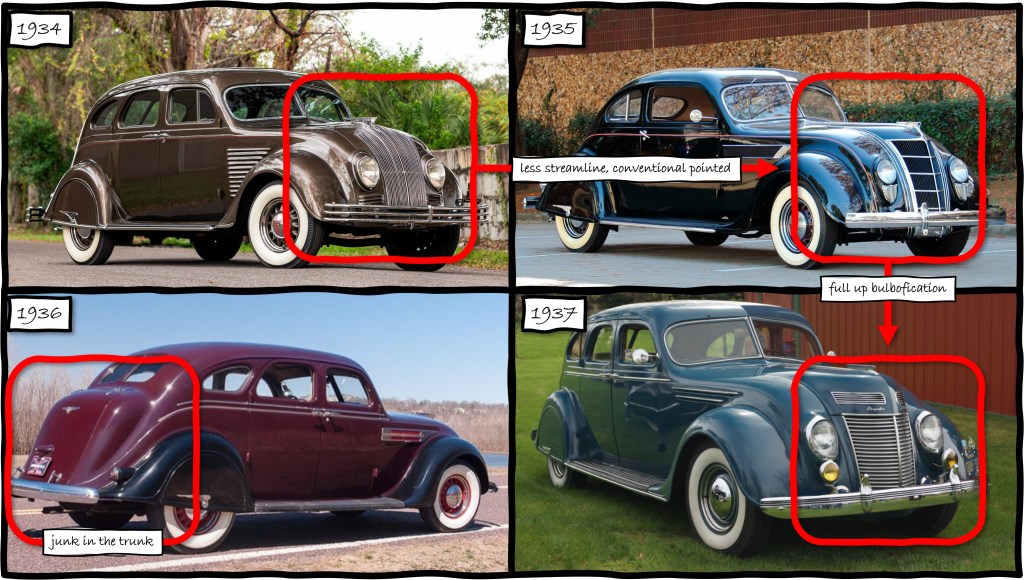
People often attack what they don’t understand. They criticized the unibody construction, they called it unsafe instead of unfamiliar. Unibody was obviously just another term for the devil. But a Beelzebub of of a body it was not. To pile onto the untethered hate levied upon the Airflow’s look, General Motors launched a smear campaign trying to further discredit the car. For all the innovation stuffed inside this sassy sedan, General Motors turned the tables and called into question whether innovation was good. A problem General Motors seems historic at. Can anyone say foreshadowing? #TheTuckerTorpedo #WhoKilledTheElectricCar
Chrysler and its sister company DeSoto were fighting a loosing battle. People just didn’t want to take anymore chances at the height of the Great Depression. Was now the time to try something new? Not likely. As the country suffered people craved the familiar not the radical. Chrysler continued to produce more “traditional” vehicles which outsold the Airflows almost three to one. DeSoto, that was a different story. Their entire lineup had migrated over to the Airflows design. Like a rock trying to swim, they were sinking. The damage dealt by the backlash pushed Chrysler and it’s designers into conventional territory for the next 18 years.
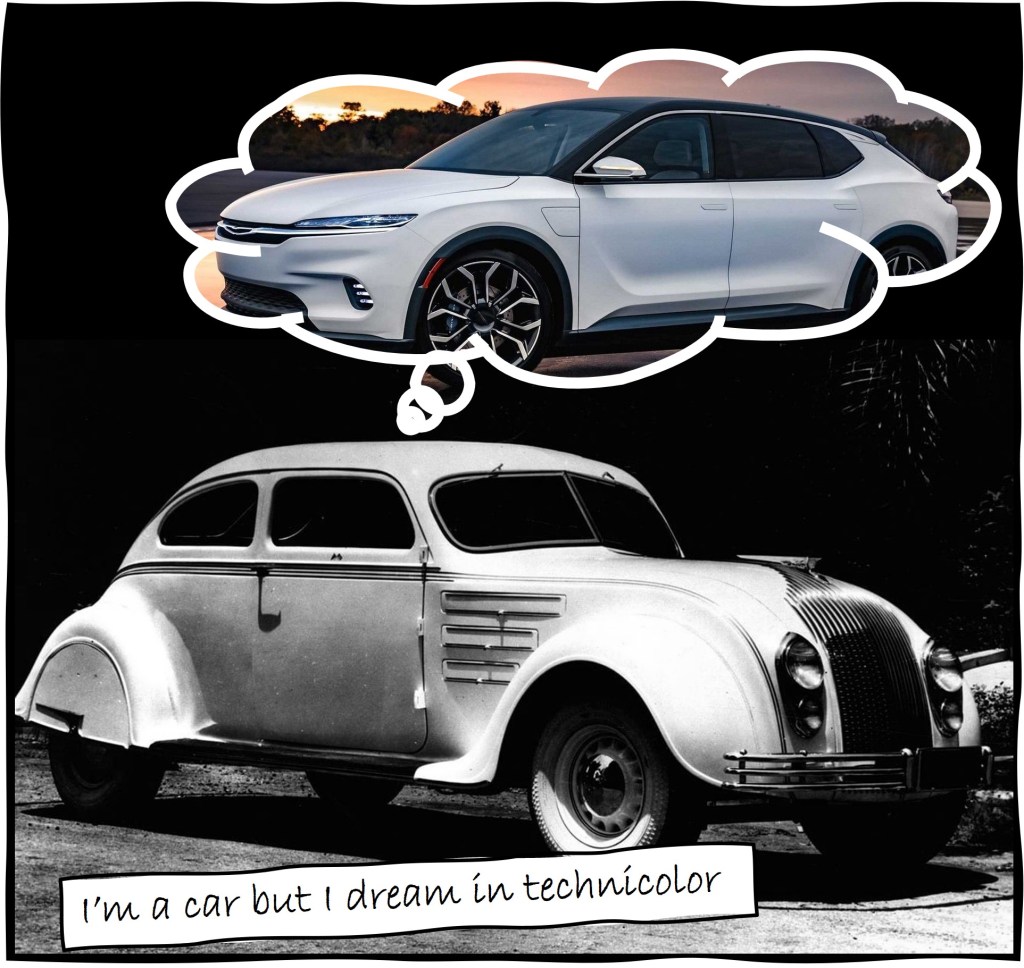
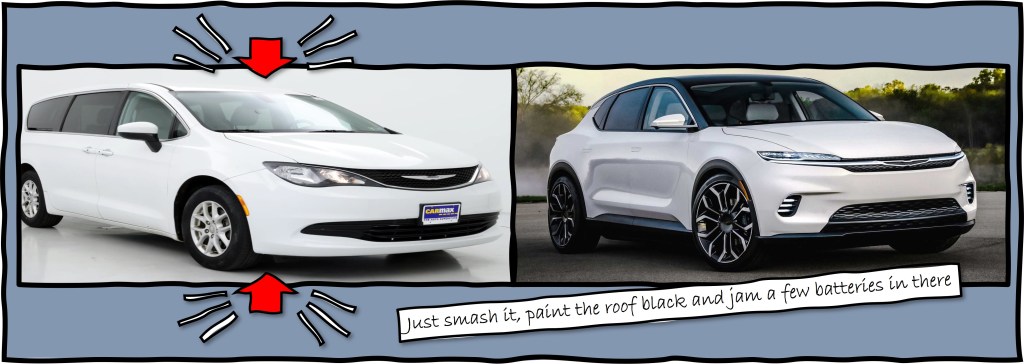
Perhaps this conventional thinking is why Chrysler decided 88 years, as opposed to Fords 45 years, was enough elapsed time to reintroduced an unremarkable nameplate. 2025 will see the second, all electric, generation of the Chrysler Airflow and am excited. The original was beautiful in both its art deco styling and engineering. While the new model looks like a squished Pacifica, the snarky face and curvy hips have a certain attitude I can get behind… so to speak.
Now excuse me while I do math: 45 years for an unremarkable nameplate, 88 years for a misunderstood nameplate… 45 and 88 and 2022… I predict the rebirth of Pontiac and their Aztek in 2,155.



Pingback: Total Eclipse of the Heart | AutoDodo